Inspiration
As of 2023, there are only 1300 ‘Akiapōlā’au left in the wild. This critically endangered bird is native to the Big Island of Hawai’i and plays a vital role in its ecosystem.
Conservation Status
Federal
Endangered
🔶
State
Endangered
🔶
State recognized
Endemic
💛
Species Description
The Akiapōlā‘au is a small Hawaiian bird with a 4.5 – 5.5-inch curved bill for finding insects and nectar. Its sweet, warbling song can be heard in the high-elevation forests of the Big Island of Hawaii, where it lives in koa and ‘ōhi‘a trees.

Adult males have a bright yellow head and underparts, yellow-green back and wings, and a small, black mask.
Adult females are olive above with grayish-yellow to yellow underparts.
Photo credit: Schmierer, A. (2017). Akepa (Loxops coccineus)
Threats
The ‘Akiapōlā‘au, like other Island honeycreepers, faces threats such as habitat loss, invasive species, and avian diseases. It also has a low reproductive potential, laying only one egg per breeding season and requiring substantial parental care. The extended time for chicks to become independent limits the number of offspring raised each year.
The ‘Akiapōlā’au has a slow reproductive rate, resulting in long intervals between breeding attempts due to the high energy demands of raising chicks. This low reproductive rate makes it difficult for the population to recover quickly from declines caused by habitat loss, predation, or disease.
Conservation

Conservation efforts that help all the endangered honeycreepers involve protecting habitats and managing mosquitoes. Specialized tactics also may address the specific needs of the ‘Akiapōlā‘au.
Photo credit: ʻAkiapolaʻau (United States Fish and Wildlife Service, 2009)
Captive Breeding and Release Programs: Captive breeding programs aim to increase the population size by breeding ‘Akiapōlā‘au in controlled environments and then releasing them into the wild. This approach helps boost numbers and genetic diversity.
Nest Monitoring and Protection: Conservationists monitor nests to ensure the survival of chicks. Protective measures might include placing predator guards around nesting trees and providing supplementary food to improve chick survival rates.
Nature Art
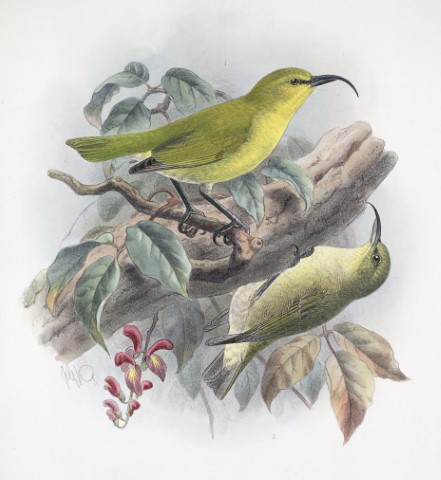
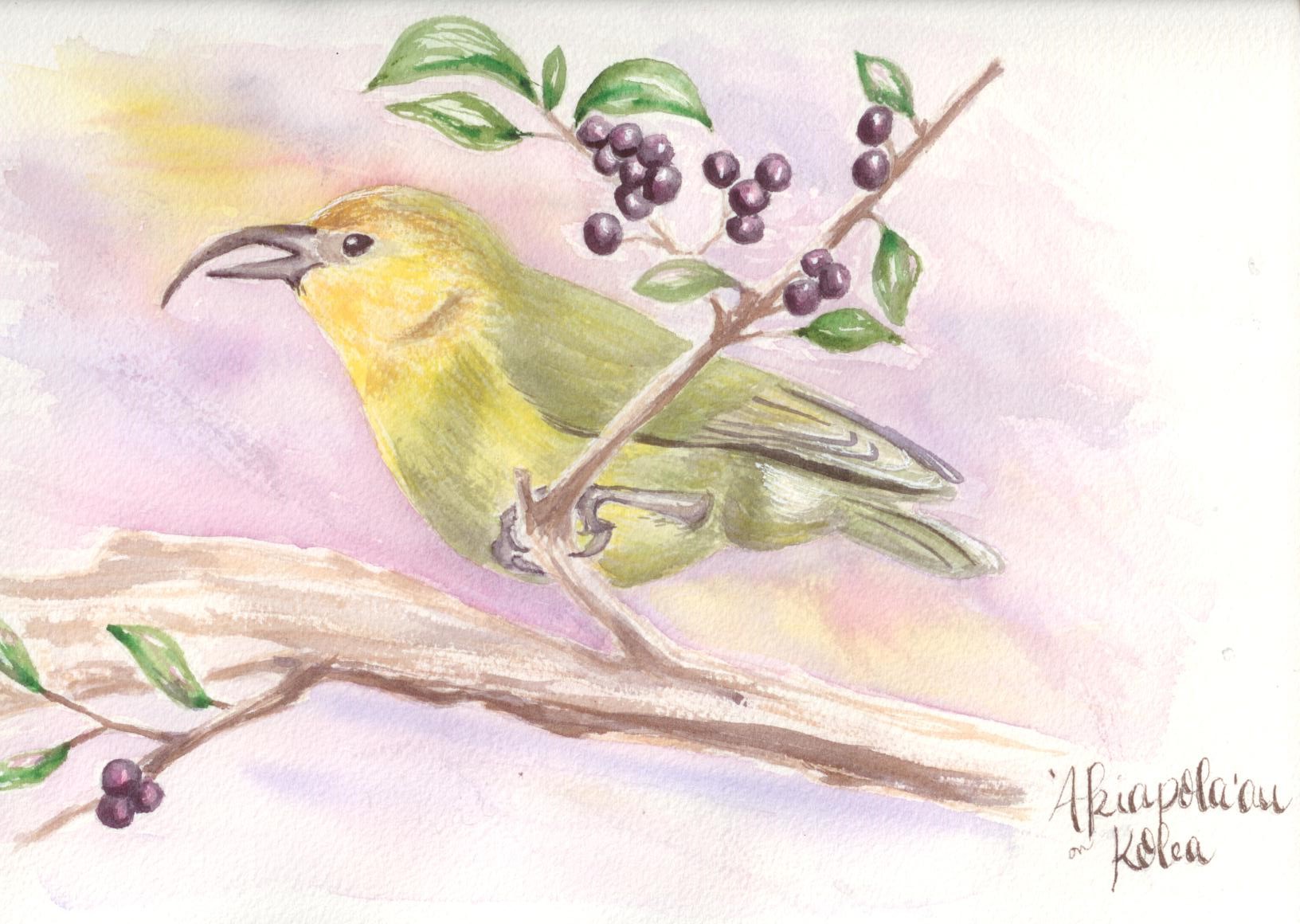
In Rothschild’s painting, the male and female ‘Akiapōlā‘au appears to be perched in a koa (Acacia koa) tree. I painted the ‘Akiapōlā‘au perched on a branch of of Pilo tree. Honeycreepers, including the ‘Akiapōlā‘a, forage for insects and spiders on a variety of trees, including the pilo tree, which is endemic and endangered species on Hawai’i island.

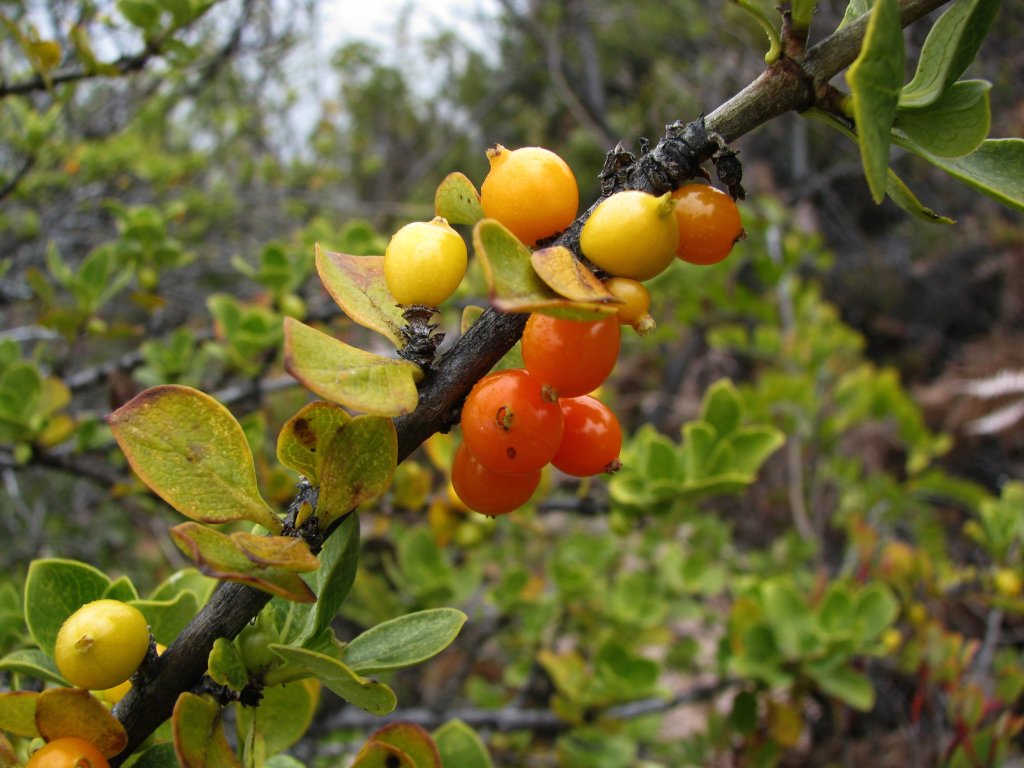
Pilo (Coprosma montana) is a native Hawaiian rainforest plant and member of the coffee family that can be found in Hawaiʻi Volcanoes National Park.
Photo credit: Pilo (Eickhoff, D., 2004)
References
Click here to see the amazing references used for this post
Department of Land and Natural Resources. (n.d.). ‘Akiapōlā‘au. Hawaii Division of Forestry and Wildlife. Retrieved July 21, 2024, from https://dlnr.hawaii.gov/wildlife/birds/akiapolaau/
Eickhoff, D. (2004) Pilo [photograph]. CC BY 2.0 . Retrieved July 22, 2024, from https://commons.wikimedia.org/wiki/File:Coprosma_montana_%284736585487%29.jpg
Hawaii Audubon Society. (2005). Hawaii’s birds (6th ed.).
IUCN. (n.d.). Akiapolaau. The IUCN Red List of Threatened Species 2023: e.T22720799A221368605. Retrieved July 22, 2024, from://www.iucnredlist.org/species/22720799/221368605
Pacific Rim Conservation. (2013). Hawaii honeycreepers multi-species. Retrieved from https://pacificrimconservation.org/wp-content/uploads/2013/10/Hawaii%20honeycreepers%20multi-species%20.pdf
Rothschild, L. (1893). Heterorhynchus wilsoni, male and female [photograph]. In The avifauna of Laysan and the neighbouring islands : with a complete history to date of the birds of the Hawaiian possessions illustrated with coloured and black plates by Messrs. Keulemans and Frohawk [plates] (1893), London : R.H. Porter. Retrieved June 13, 2024, from https://library.si.edu/image-gallery/105173
Schmierer, A. (2017). AKIAPOLA’AU (8-30-2017) hakalau forest national wildlife refuge, hawaii co, hawaii -08 male [photograph]. CC0 1.0. Retrieved July 21, 2024, from https://commons.wikimedia.org/wiki/File:Akiapola%27au_(8-30-2017)_Hakalau_Forest_National_Wildlife_Refuge,_Hawaii_co,_Hawaii_-08_male_(36977826146).jpg
United States Fish and Wildlife Service. (2009). Public domain. ʻAkiapolaʻau (Hemignathus munroi) attempting to extract insects from a tree branch [photograph]. Retrieved June 13, 2024, from https://ecos.fws.gov/docs/misc/doc886.jpg
 Inga J Smith

_Hakalau_Forest_National_Wildlife_Refuge,_Hawaii_co,_Hawaii_-08_male_(36977826146).jpg)
