“Color isn’t in the leaf. It’s in the light.”
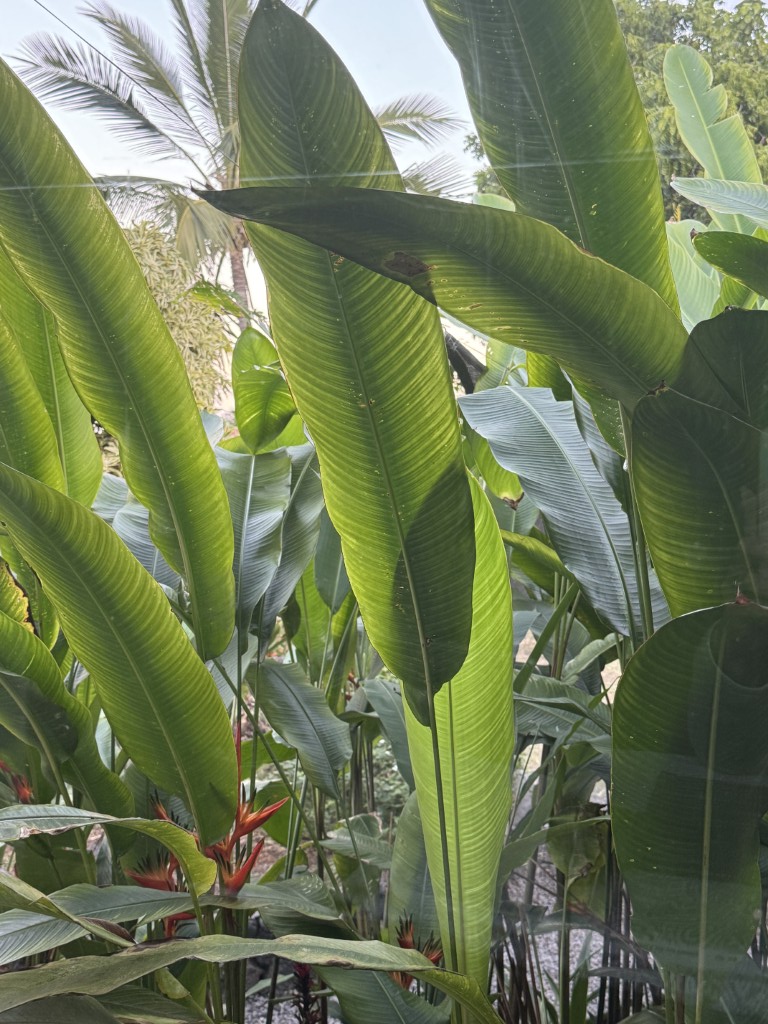
As I sit here in my studio on this perfect December day in Hawai‘i, I’m watching tropical leaves sway gently in the trade winds. The shapes and forms of the bird-of-paradise leaves outside my window are mesmerizing. In this little moment of calm, I wanted to jot down a memory and capture a few inspirations.
A Small Memory
My fascination with natural art began many moons ago in an undergraduate physics class called Light and Color. For my capstone project, I wanted to connect lessons from biology (photosynthesis) with physics (light). My research question seemed simple: How does chlorophyll work? I quickly discovered it was anything but simple. That class opened the door to countless questions I’m still exploring today.
The Object: Chlorophyll and the Colors of Light
Light itself is made up of different wavelengths, which Isaac Newton famously separated into the seven colors of the rainbow: red, orange, yellow, green, blue, indigo, and violet. The colors we see are simply the wavelengths reflected back to our eyes—so that leftover green is exactly what fills forests, fields, and gardens.
Chlorophyll absorbs the high-energy, cool blues and the lower-energy, warm reds, but barely touches the greens. Chlorophyll a strongly absorbs blue (~430 nm) and red (~660 nm) light, while chlorophyll b absorbs blue-green (~455 nm) and orange-red (~640 nm) wavelengths.
In this graph, chlorophyll a and b absorption curves are layered over the visible spectrum. You can see the magic: the peaks show where plants work hardest, and the valley reveals the color that slips through—green. I remember that I hand-sketched a similar graph for my project. This graph was created mostly with ChatGPT (so much easier).

The Receiver: How Our Eyes See Color
To continue the story, we need to understand how our eyes see color. Humans typically see wavelengths from about 400 to 700 nm, the full span of the visible rainbow. Human eyes have cones and rods to interpret light and color. We have three types of cones that detect red, green, or blue light and send signals to the brain. Rods, by contrast, don’t sense color—they detect light and dark, helping us see shapes, shadows, and movement, especially in dim light. Together, rods and cones give us a full picture of the world, with both color and contrast. And because every brain interprets signals slightly differently, we all experience green in our own unique way.
The Artist: Capturing Nature’s Greens
So how might a natural artist colorize a leaf? Should we use Sap Green? Or maybe Hunter’s Green? Or perhaps one of the dozens of other greens available? (Daniel Smith alone has 22 paints in their Extra Fine Watercolor line with “green” in the description, and this doesn’t even include the greens in their PrimaTek or Luminescent lines!).
Natural greens are far more complex than they appear. Leaves aren’t just “green.” Their color shifts constantly depending on the angle of light, the amount of chlorophyll, the age of the leaf, shadows from other plants, moisture, and even dust or pollen on the surface. What we see is reflected light—not a single pigment—so our eyes pick up subtle mixtures of yellow, blue, olive, gray, and hints of red or violet within that “simple” green.
This is why painting a believable leaf or tree often requires mixing multiple colors rather than grabbing one tube of green. Nature’s greens are alive; they change moment by moment.
Looking back, that physics class was the beginning of it all—a mix of science and art—which is where I am focused today. Natural art history — artists exploring and documenting nature, as it is in the moment.
Long before watercolor, I fell in love with color through physics.
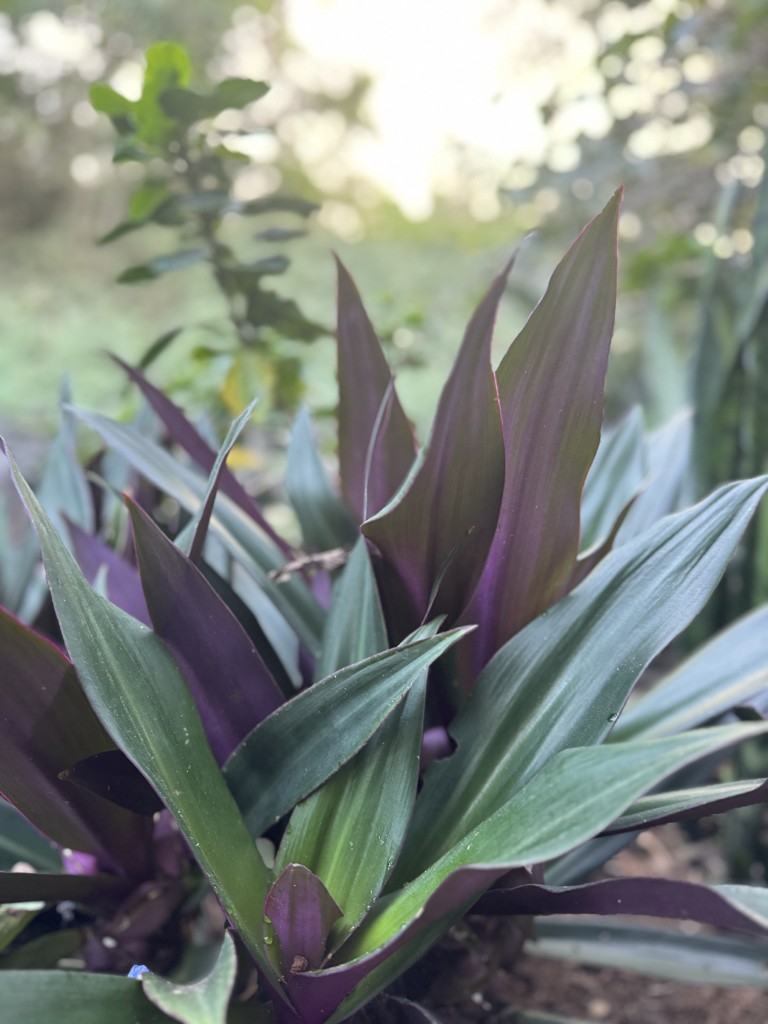
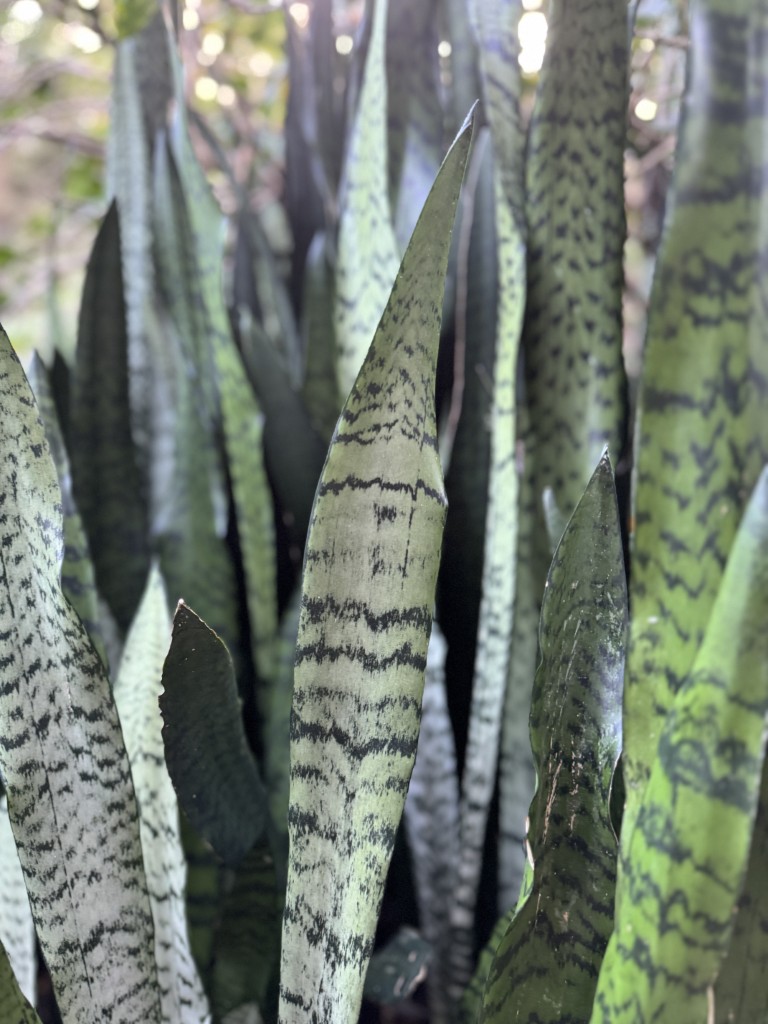
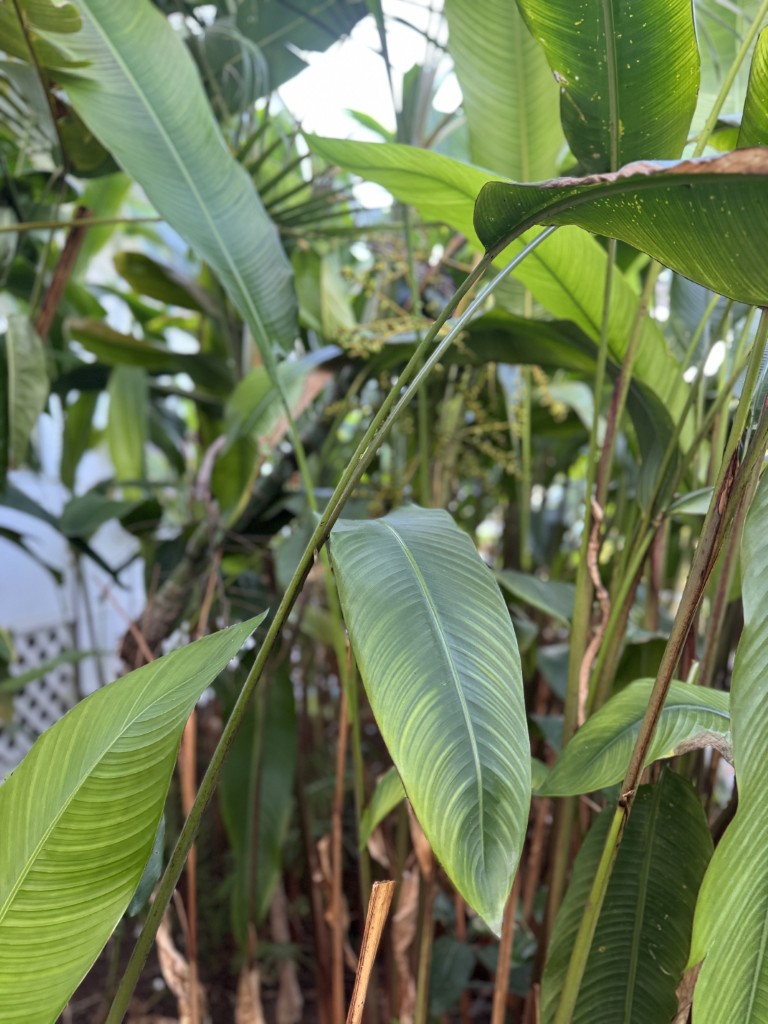
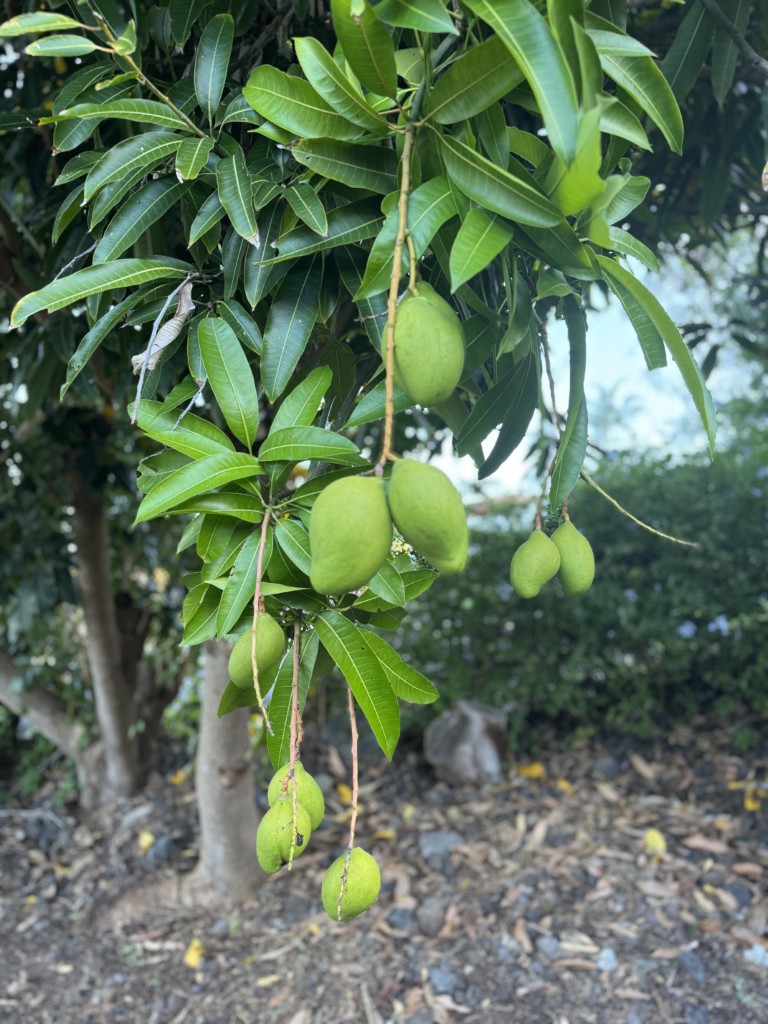
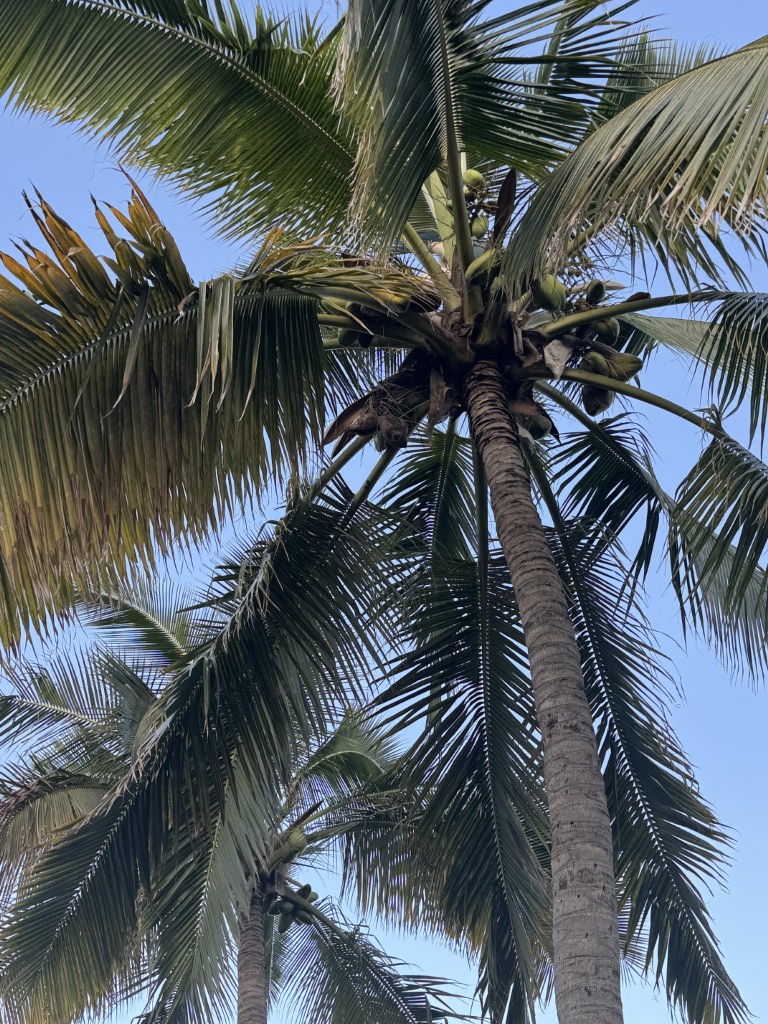
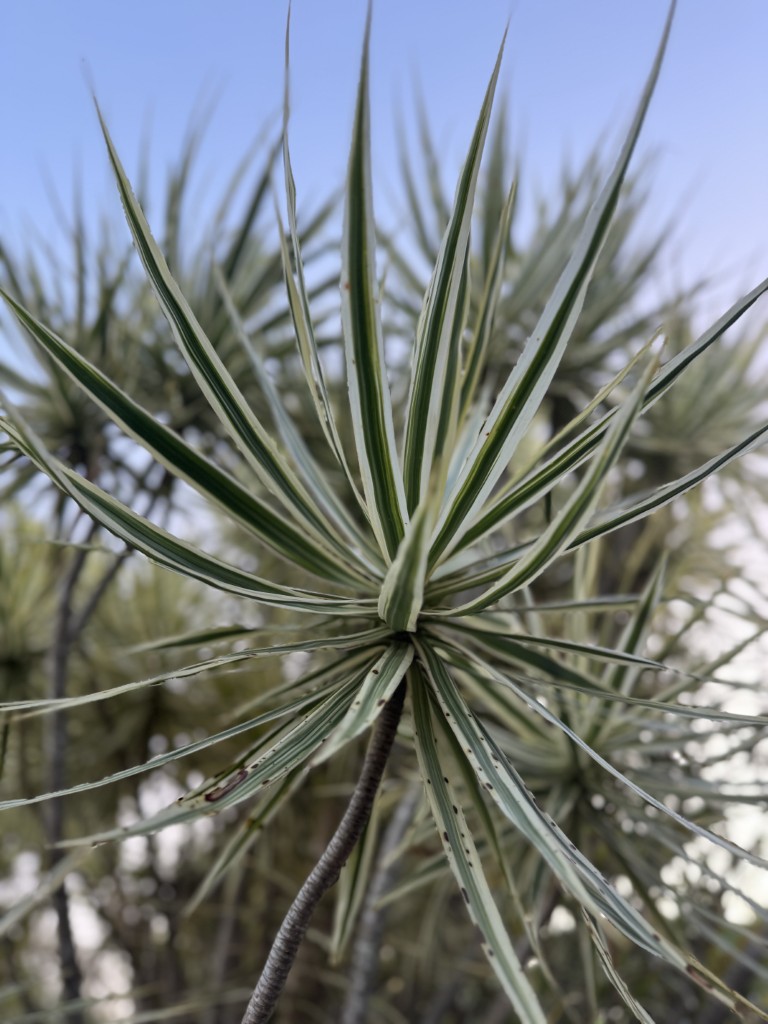
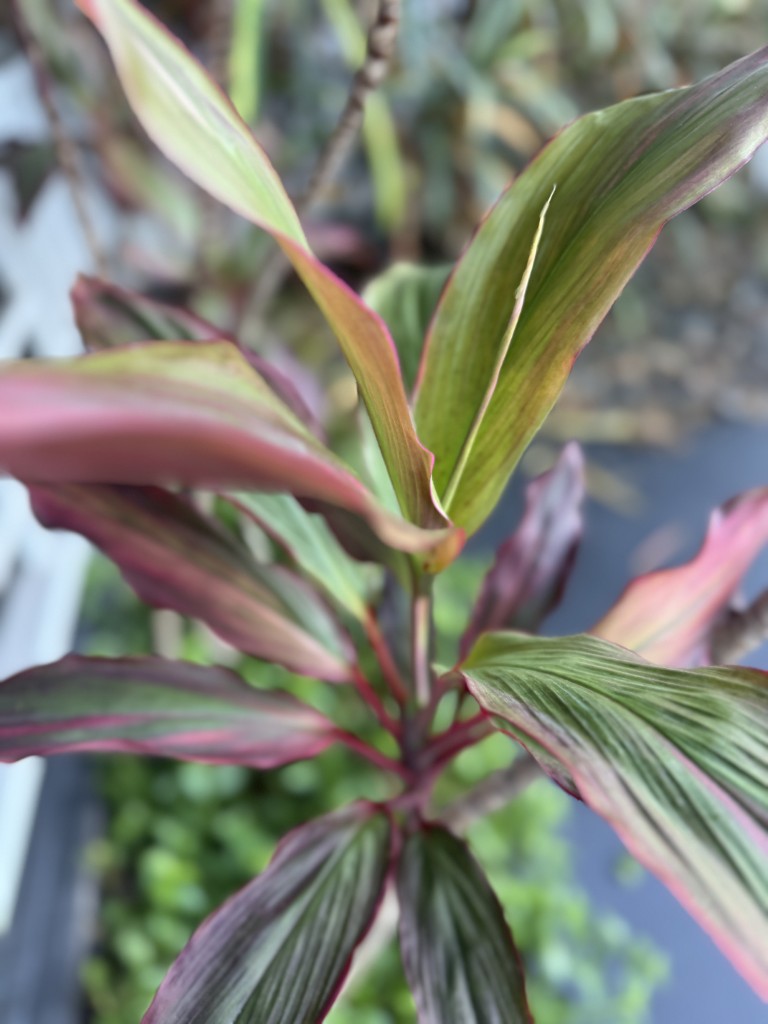
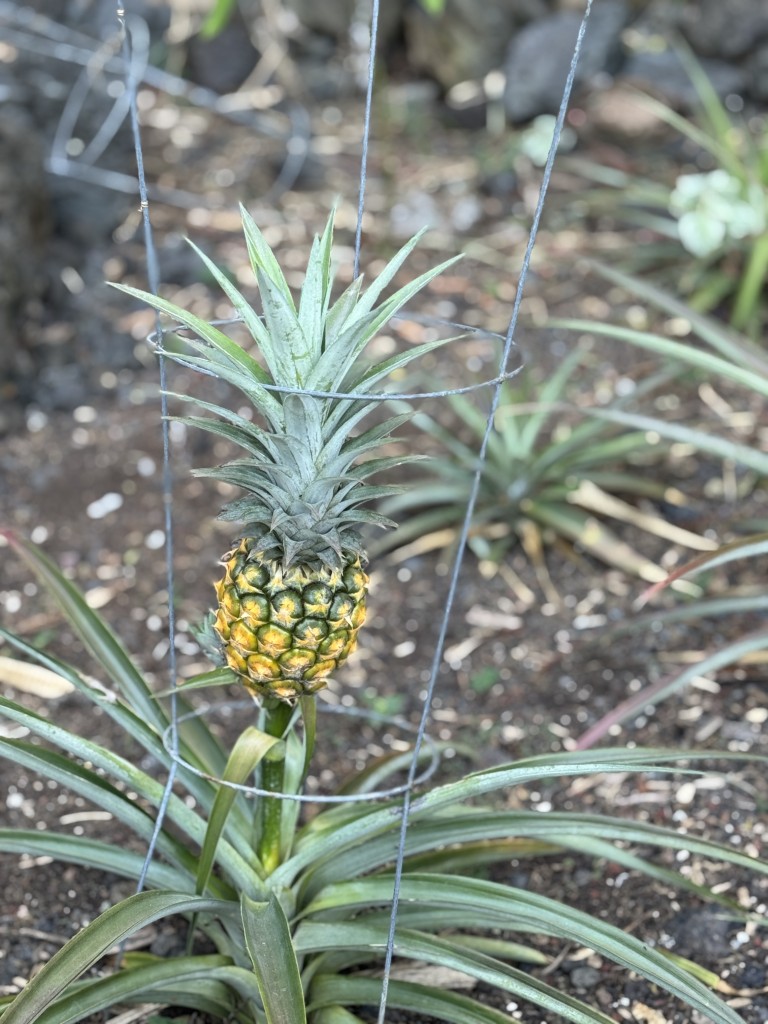
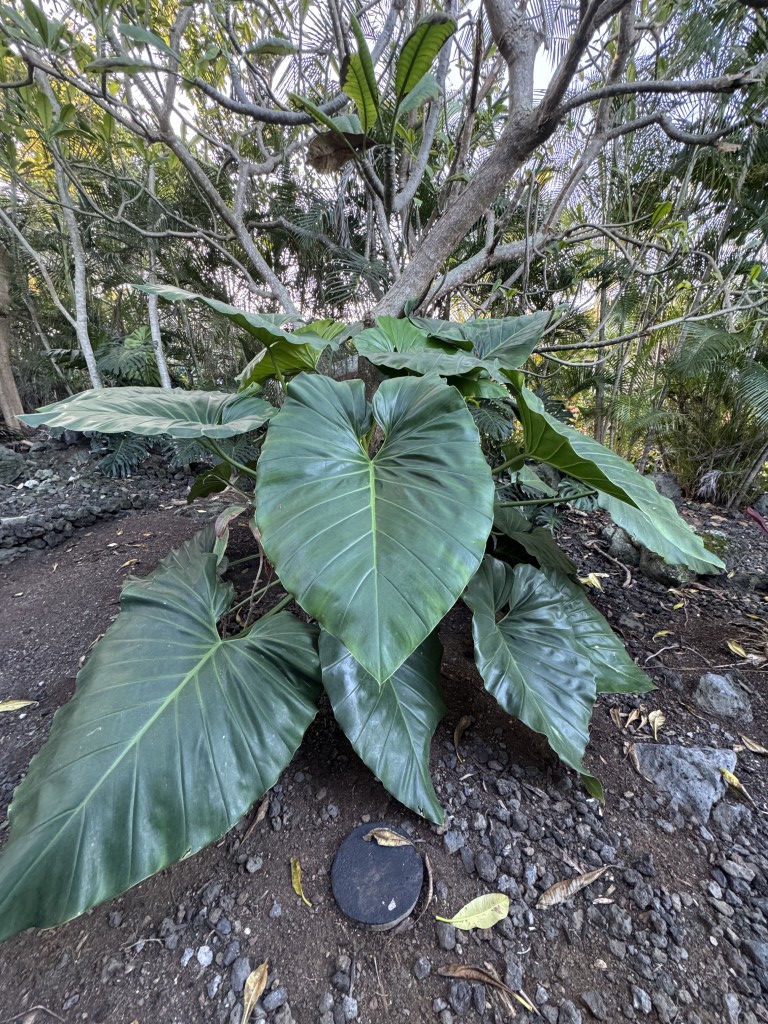
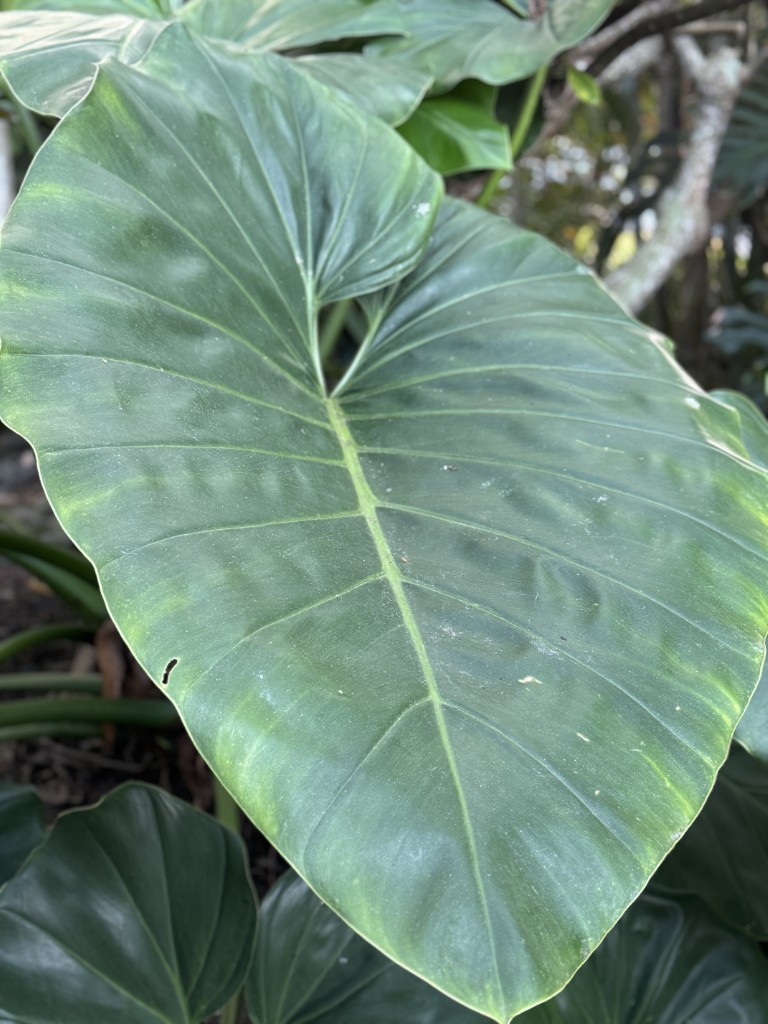
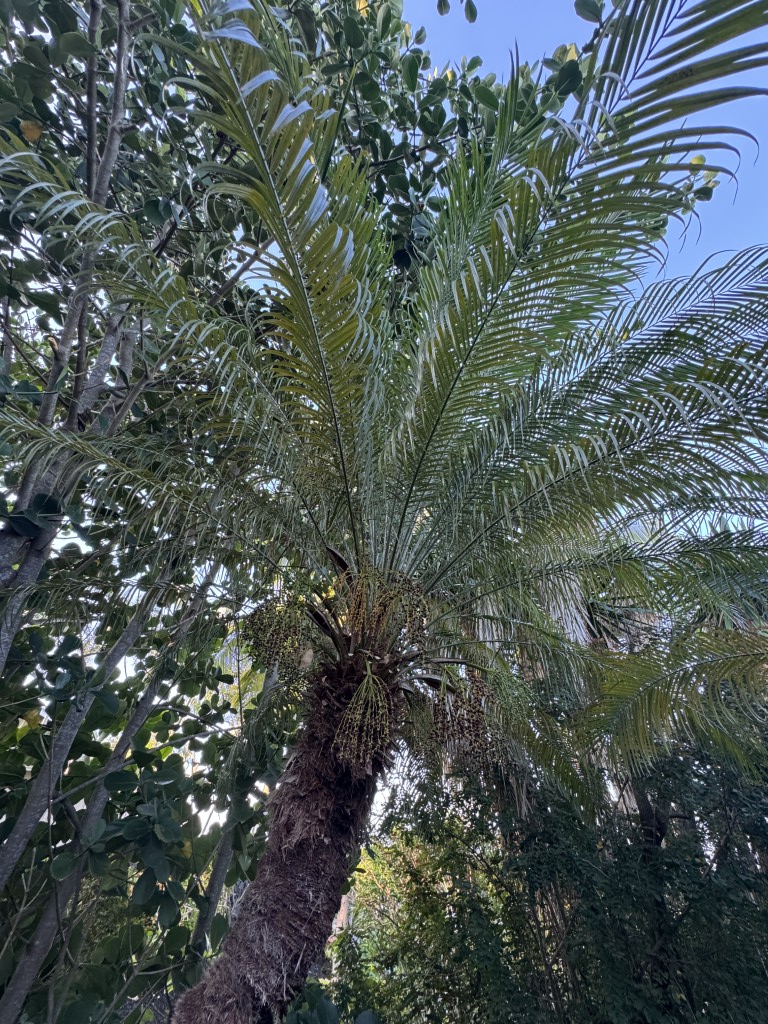
I’m sharing some leaf inspirations from my yard here on the Big Island. Pictures were taken this morning as the sun was rising on 12/4/2025. I think someday when I’m back in cold and rainy Seattle, I’ll try to paint even more of these tropical beauties. 💚

Further Reading
If you want to find out more, you may find these interesting.
Nassau, K. (2025, December 1). “The perception of colour.” In Encyclopaedia Britannica. Retrieved from https://www.britannica.com/science/color/The-perception-of-colour Encyclopedia Britannica
Spring, K. R., Parry‑Hill, M. J., & Davidson, M. W. (1998–2025). Microscopy Primer: Physics of Light and Color – Human Vision and Color Perception. The Florida State University (National High Magnetic Field Laboratory). Retrieved from https://micro.magnet.fsu.edu/primer/lightandcolor/humanvisionhome.html micro.magnet.fsu.edu
Urone, P. P., & Hinrichs, R. (2022). Color and Color Vision. In College Physics 2e. OpenStax. Retrieved from https://openstax.org/books/college-physics-2e/pages/26-3-color-and-color-vision OpenStax
#naturalarthistory #natureart #naturalart #inspiration #chlorophyll #leaves #bigisland #zen
 Inga J Smith